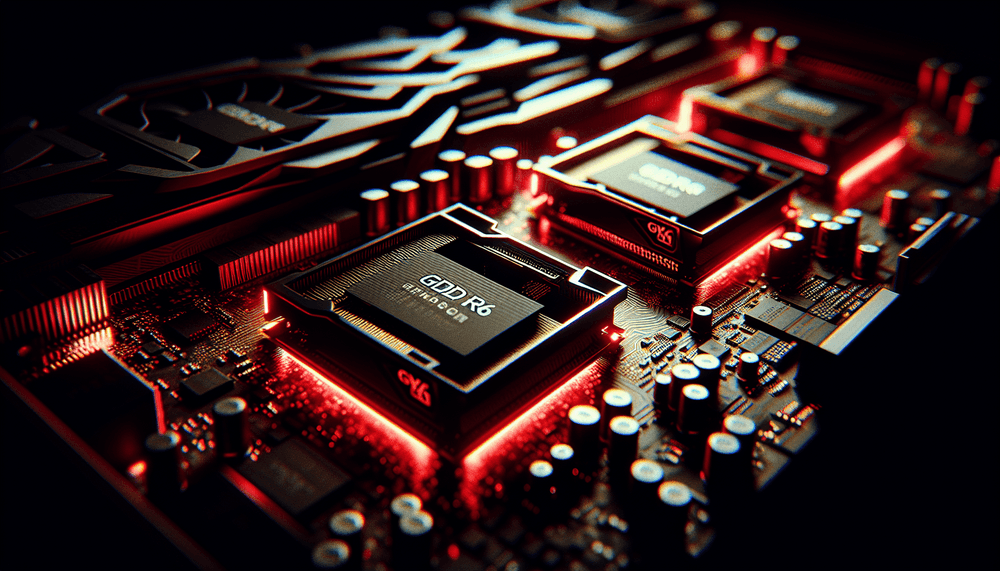
GPUBreach Demonstrates New GPU Memory Attack Vector
Security researchers unveiled GPUBreach on April 6, 2026, a sophisticated attack technique that exploits Rowhammer vulnerabilities in GPU GDDR6 memory to achieve privilege escalation and system compromise. The attack represents the first documented method for inducing bit-flips in graphics memory to break security boundaries between user and kernel space.
The GPUBreach technique works by repeatedly accessing specific memory rows in GDDR6 modules at high frequency, causing electrical interference that corrupts adjacent memory cells. Unlike traditional Rowhammer attacks that target system RAM, this method focuses on the graphics subsystem where memory protections are often less robust. The researchers demonstrated that by carefully timing memory access patterns through GPU compute shaders, attackers can reliably trigger bit-flips in targeted memory locations.
The attack leverages the high-bandwidth nature of GDDR6 memory, which operates at speeds up to 16 Gbps per pin. This increased speed, while beneficial for graphics performance, creates stronger electromagnetic interference between adjacent memory rows. The researchers found that specific access patterns could amplify this interference to the point where bit-flips occur predictably within 30 seconds of sustained access.
What makes GPUBreach particularly concerning is its ability to operate from unprivileged user space through standard graphics APIs. The attack doesn't require administrative access or specialized hardware knowledge, making it accessible to a broader range of threat actors. The technique can be embedded in malicious web content, games, or GPU-accelerated applications without triggering traditional security monitoring systems.
The research team tested GPUBreach across multiple GPU architectures and found consistent results on cards from major manufacturers. The attack proved most effective on systems with shared GPU memory architectures where graphics memory directly interfaces with system memory through unified memory addressing schemes.
GDDR6-Equipped Systems Face Privilege Escalation Risk
The GPUBreach attack affects systems equipped with modern graphics cards using GDDR6 memory technology, which includes virtually all high-end consumer and professional graphics cards released since 2018. This encompasses NVIDIA GeForce RTX 20-series and newer cards, AMD Radeon RX 6000-series and newer, and professional workstation cards from both manufacturers. The vulnerability particularly impacts gaming systems, workstations, and data centers running GPU-accelerated workloads.
Enterprise environments face heightened risk due to the prevalence of GPU computing in machine learning, cryptocurrency mining, and scientific computing applications. Cloud service providers offering GPU instances are especially vulnerable, as the attack could potentially allow one virtual machine to compromise the underlying hypervisor through shared graphics hardware. The CISA Known Exploited Vulnerabilities catalog doesn't yet list this specific attack vector, but similar memory corruption techniques have been actively exploited in the wild.
Systems with integrated graphics solutions that share system memory are at lower risk, as they don't utilize dedicated GDDR6 modules. However, hybrid systems with both integrated and discrete graphics may still be vulnerable through the discrete GPU pathway. The attack's effectiveness varies based on memory timing configurations, thermal conditions, and the specific GDDR6 manufacturer, with some memory modules showing higher susceptibility to induced bit-flips.
Mitigation Strategies and Detection Methods for GPUBreach
Organizations can implement several defensive measures to protect against GPUBreach attacks while researchers and vendors develop comprehensive patches. The most immediate protection involves restricting GPU compute access for untrusted applications through group policy or application whitelisting. System administrators should monitor GPU utilization patterns for sustained high-frequency memory access that doesn't correlate with legitimate graphics workloads.
Memory timing adjustments can reduce attack effectiveness by altering the electrical characteristics that enable bit-flips. This involves modifying GDDR6 refresh rates and access timing through vendor-specific utilities, though this may impact graphics performance. Some enterprise graphics drivers include memory scrambling features that randomize physical memory layouts, making targeted bit-flip attacks significantly more difficult to execute reliably.
Detection strategies focus on monitoring GPU memory access patterns and system call anomalies that indicate privilege escalation attempts. Security teams should implement logging for unusual GPU compute shader compilation and execution, particularly shaders that perform repetitive memory access without corresponding visual output. The Microsoft Security Response Center recommends enabling enhanced GPU security features available in Windows 11 22H2 and later versions.
Long-term mitigation requires hardware-level solutions including error-correcting code (ECC) memory for graphics cards and improved memory controller designs that detect and prevent Rowhammer-style attacks. GPU manufacturers are expected to release firmware updates that implement memory access rate limiting and enhanced monitoring capabilities. Until comprehensive patches are available, organizations should treat GPU-accelerated applications with the same security scrutiny applied to other privileged system components.