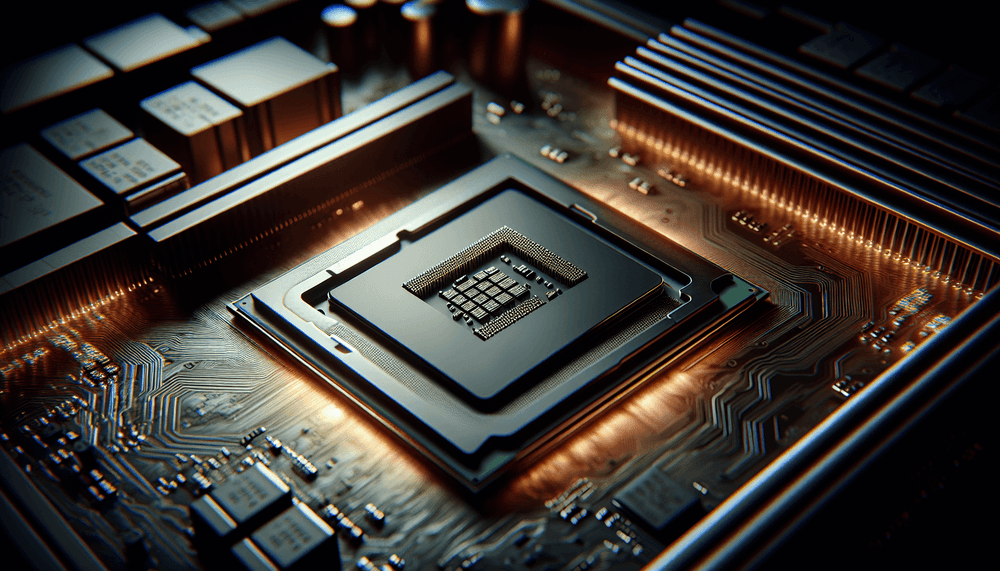
AMD Breaks New Ground with Dual-Chiplet 3D V-Cache Design
AMD announced the Ryzen 9 9950X3D2 processor on March 26, 2026, marking a significant evolution in the company's 3D V-Cache technology. This flagship chip represents the first consumer processor to feature 3D V-Cache stacking on both chiplets within a single package, doubling the cache capacity compared to previous X3D variants.
The 9950X3D2 builds upon AMD's proven Zen 4 architecture while incorporating lessons learned from the successful Ryzen 7000X3D series. Unlike the original 9950X3D which featured 3D V-Cache on only one of its two chiplets, this new processor extends the technology across both dies. This architectural advancement addresses the primary limitation of earlier dual-chiplet X3D processors, where workloads could experience performance inconsistencies depending on which chiplet handled the processing.
The announcement comes as AMD continues to push the boundaries of cache technology in consumer processors. The original 3D V-Cache implementation, first introduced with the Ryzen 7 5800X3D, demonstrated significant gaming performance improvements by reducing memory latency through additional L3 cache layers. The dual-chiplet approach in the 9950X3D2 extends these benefits across all 16 cores, eliminating the performance asymmetry that characterized previous dual-chiplet X3D designs.
Industry analysts note this development positions AMD to maintain its competitive edge in high-performance computing segments. The processor targets enthusiasts and professionals who demand maximum performance for gaming, content creation, and computational workloads. Windows Central reports that the chip represents AMD's most ambitious consumer processor design to date.
Related: OpenAI Halts ChatGPT Adult Mode Development
Related: Vivaldi 7.9 Launches with Mobile Features for Android and
Related: WhatsApp Adds AI Replies, Dual iOS Accounts, Cross-Platform
Related: NVIDIA unveils RTX Dynamic MFG at GDC 2026
Related: Intel Launches Core Ultra 200HX Plus Mobile Processors
Target Users and Market Impact for Ryzen 9 9950X3D2
The Ryzen 9 9950X3D2 primarily targets high-end desktop users, including gaming enthusiasts, content creators, and professional workstation operators. System builders and OEMs focusing on premium gaming rigs and workstations will likely integrate this processor into their flagship configurations. The dual-chiplet 3D V-Cache design particularly benefits users running cache-sensitive applications such as modern AAA games, video editing software, and scientific computing workloads.
Enterprise users operating virtualization environments and development workstations stand to gain from the increased cache capacity across all cores. Unlike previous X3D processors where certain cores lacked 3D V-Cache benefits, the 9950X3D2 ensures consistent performance regardless of thread scheduling. This makes it suitable for professional applications that scale across multiple cores, including CAD software, 3D rendering engines, and database applications.
The announcement impacts AMD's competitive positioning against Intel's upcoming Arrow Lake processors. System integrators and enthusiasts who previously hesitated to adopt X3D technology due to dual-chiplet performance inconsistencies now have a more balanced option. The processor also affects the broader AM5 ecosystem, as existing AM5 motherboard owners can potentially upgrade to this new flagship without platform changes, assuming BIOS compatibility updates from motherboard manufacturers.
Technical Specifications and Implementation Details
The Ryzen 9 9950X3D2 maintains the 16-core, 32-thread configuration of its predecessor while implementing 3D V-Cache technology on both chiplets. This design doubles the additional L3 cache from 64MB to 128MB compared to the standard 9950X, bringing total L3 cache to 192MB across the processor. The dual-chiplet implementation requires sophisticated thermal management, as 3D V-Cache layers generate additional heat that must be dissipated effectively.
AMD's implementation includes enhanced power management algorithms to balance performance and thermal constraints across both chiplets. The processor supports existing AM5 socket infrastructure, maintaining compatibility with DDR5 memory and PCIe 5.0 connectivity. However, the increased cache capacity and dual-chiplet 3D design may require updated motherboard BIOS versions to fully optimize performance and ensure proper thermal monitoring.
System builders should prepare for potentially higher cooling requirements compared to standard Ryzen 9000 series processors. The dual 3D V-Cache implementation may necessitate premium cooling solutions to maintain optimal boost clocks under sustained workloads. AMD has not yet disclosed specific TDP ratings or pricing information, but industry expectations suggest the processor will command a significant premium over the standard 9950X. Reuters Technology coverage indicates the chip represents AMD's continued investment in advanced packaging technologies for consumer markets.