ANAVEM
Languagefr
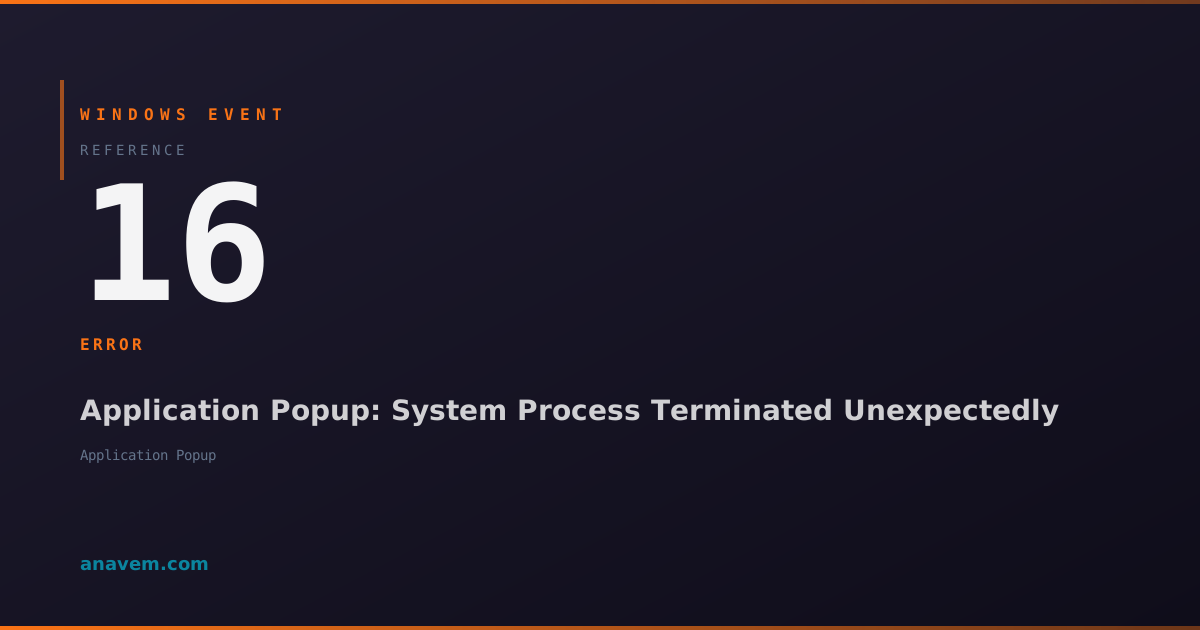
Windows Event Viewer displaying critical system error Event ID 16 on administrator workstation
Event ID 16ErrorApplication PopupWindows

Windows Event ID 16 – Application Popup: System Process Terminated Unexpectedly

Event ID 16 indicates a critical system process has terminated unexpectedly, triggering Windows Error Reporting and potentially causing system instability or blue screen crashes.

Emanuel DE ALMEIDAEmanuel DE ALMEIDA
18 March 202612 min read 0
Event ID 16Application Popup 5 methods 12 min
Event Reference

What This Event Means

Event ID 16 represents one of the most critical system events in Windows, signaling that a core system process has terminated abnormally. The Application Popup service, which manages system-level error dialogs and notifications, generates this event when it detects that essential Windows processes have stopped functioning.

The event typically contains detailed information about the terminated process, including its process ID, executable path, and termination reason. This data is invaluable for forensic analysis and troubleshooting system stability issues. Common processes that trigger this event include the Client Server Runtime Process (csrss.exe), Local Security Authority Subsystem Service (lsass.exe), and Windows Logon Process (winlogon.exe).

When Event ID 16 occurs, Windows may attempt automatic recovery by restarting the affected service or initiating a controlled system restart. However, repeated occurrences indicate underlying issues such as memory corruption, driver conflicts, malware infections, or hardware failures. The event serves as an early warning system for catastrophic system failures and should trigger immediate investigation protocols.

Modern Windows versions in 2026 have enhanced error reporting capabilities that provide more detailed context for Event ID 16, including memory dump analysis and automatic correlation with Windows Update installations or driver changes.

Applies to

Windows 10Windows 11Windows Server 2019/2022/2025
Analysis

Possible Causes

  • Memory corruption affecting critical system processes
  • Malware or rootkit infections targeting system processes
  • Faulty device drivers causing system process crashes
  • Hardware failures, particularly RAM or CPU instability
  • Windows Update conflicts or incomplete installations
  • Third-party security software interfering with system processes
  • Registry corruption affecting process initialization
  • Disk errors preventing process execution
  • Power supply issues causing unexpected process termination
  • Overheating leading to system instability
Resolution Methods

Troubleshooting Steps

01

Analyze Event Details in Event Viewer

Start by examining the specific details of Event ID 16 to identify the terminated process and gather forensic information.

  1. Open Event Viewer by pressing Win + R, typing eventvwr.msc, and pressing Enter
  2. Navigate to Windows LogsSystem
  3. Filter for Event ID 16 using the Filter Current Log option
  4. Double-click the most recent Event ID 16 entry to view details
  5. Note the process name, PID, and termination reason in the event description
  6. Use PowerShell to extract detailed information:
Get-WinEvent -FilterHashtable @{LogName='System'; Id=16} -MaxEvents 10 | Format-List TimeCreated, Id, LevelDisplayName, Message

Cross-reference the terminated process with running services and recent system changes. Document the exact time of occurrence for correlation with other system events.

02

Check System File Integrity and Memory

Verify system file integrity and test memory stability to identify corruption issues that may cause process termination.

  1. Open Command Prompt as Administrator
  2. Run System File Checker to scan for corrupted files:
sfc /scannow
  1. Execute DISM to repair the Windows image:
DISM /Online /Cleanup-Image /RestoreHealth
  1. Test system memory using Windows Memory Diagnostic:
mdsched.exe
  1. Schedule a restart to run memory test, or use PowerShell for immediate analysis:
Get-WmiObject -Class Win32_PhysicalMemory | Select-Object Capacity, Speed, Manufacturer

Pro tip: Run memory tests during off-hours as they require system restart and can take several hours to complete.

03

Investigate Recent System Changes and Updates

Analyze recent system modifications that may have triggered process instability leading to Event ID 16.

  1. Check recent Windows Updates using PowerShell:
Get-HotFix | Sort-Object InstalledOn -Descending | Select-Object -First 10
  1. Review recently installed software and drivers:
Get-WmiObject -Class Win32_Product | Where-Object {$_.InstallDate -gt (Get-Date).AddDays(-7).ToString('yyyyMMdd')} | Select-Object Name, InstallDate
  1. Examine driver installation events in Event Viewer:
  2. Navigate to Applications and Services LogsMicrosoftWindowsKernel-PnPConfiguration
  3. Filter for recent driver installation events (Event ID 400-410)
  4. Check system restore points and consider rolling back recent changes:
Get-ComputerRestorePoint | Sort-Object CreationTime -Descending

If Event ID 16 correlates with recent updates or installations, consider uninstalling problematic software or rolling back drivers through Device Manager.

04

Perform Advanced Process and Service Analysis

Conduct deep analysis of system processes and services to identify the root cause of unexpected terminations.

  1. Enable advanced logging for process tracking by modifying the registry:
Set-ItemProperty -Path 'HKLM:\SOFTWARE\Microsoft\Windows NT\CurrentVersion\Image File Execution Options' -Name 'GlobalFlag' -Value 0x02000000
  1. Use Process Monitor (ProcMon) to capture real-time process activity during Event ID 16 occurrences
  2. Analyze Windows Error Reporting data:
Get-ChildItem -Path 'C:\ProgramData\Microsoft\Windows\WER\ReportQueue' -Recurse | Where-Object {$_.LastWriteTime -gt (Get-Date).AddDays(-1)}
  1. Check for dump files that may contain crash information:
Get-ChildItem -Path 'C:\Windows\Minidump' | Sort-Object LastWriteTime -Descending
  1. Monitor critical system services status:
Get-Service | Where-Object {$_.Status -eq 'Stopped' -and $_.StartType -eq 'Automatic'} | Select-Object Name, Status, StartType

Warning: Registry modifications require careful handling. Always backup the registry before making changes.

05

Deploy Comprehensive System Monitoring and Recovery

Implement advanced monitoring and automated recovery mechanisms to prevent and respond to future Event ID 16 occurrences.

  1. Configure Windows Performance Toolkit for detailed process monitoring:
wpr -start GeneralProfile -filemode
  1. Set up automated event correlation using PowerShell scheduled tasks:
$Action = New-ScheduledTaskAction -Execute 'PowerShell.exe' -Argument '-File C:\Scripts\EventID16Response.ps1'
$Trigger = New-ScheduledTaskTrigger -AtStartup
Register-ScheduledTask -TaskName 'EventID16Monitor' -Action $Action -Trigger $Trigger -RunLevel Highest
  1. Enable advanced audit policies for process tracking:
auditpol /set /subcategory:"Process Termination" /success:enable /failure:enable
  1. Configure automatic dump collection for critical process failures:
Set-ItemProperty -Path 'HKLM:\SYSTEM\CurrentControlSet\Control\CrashControl' -Name 'CrashDumpEnabled' -Value 1
Set-ItemProperty -Path 'HKLM:\SYSTEM\CurrentControlSet\Control\CrashControl' -Name 'DumpFile' -Value 'C:\Windows\MEMORY.DMP'
  1. Implement proactive health monitoring using Windows Admin Center or System Center Operations Manager for enterprise environments

This comprehensive approach provides early warning systems and automated response capabilities to minimize the impact of critical process failures.

Overview

Event ID 16 from the Application Popup source fires when a critical system process terminates unexpectedly, causing Windows to generate an error report and potentially trigger system recovery mechanisms. This event typically appears in the System log and indicates serious stability issues that require immediate investigation.

The Application Popup service monitors system processes and generates this event when processes like csrss.exe, winlogon.exe, or lsass.exe crash or are forcibly terminated. These processes are essential for Windows operation, and their unexpected termination can lead to system instability, blue screens, or automatic restarts.

This event often correlates with other critical events like Event ID 1001 (Windows Error Reporting) and Event ID 6008 (unexpected shutdown). System administrators should treat Event ID 16 as a high-priority alert requiring immediate analysis of system health, memory integrity, and potential malware activity. The event provides crucial forensic information about which process terminated and the circumstances surrounding the failure.

Frequently Asked Questions

What does Event ID 16 from Application Popup mean?+
Event ID 16 indicates that a critical system process has terminated unexpectedly, triggering Windows Error Reporting mechanisms. This event is generated by the Application Popup service when essential processes like csrss.exe, lsass.exe, or winlogon.exe crash or are forcibly terminated. It represents a serious system stability issue that requires immediate investigation as it can lead to blue screens, system instability, or automatic restarts.
How serious is Event ID 16 and should I be concerned?+
Event ID 16 is extremely serious and should be treated as a high-priority alert. It indicates that core Windows processes essential for system operation have failed unexpectedly. This can lead to system crashes, data loss, security vulnerabilities, and complete system instability. Immediate investigation is required to identify the root cause, whether it's hardware failure, malware infection, driver conflicts, or memory corruption. Ignoring this event can result in catastrophic system failure.
Can malware cause Event ID 16 to appear?+
Yes, malware is a common cause of Event ID 16. Advanced malware, rootkits, and system-level trojans often target critical Windows processes to gain system control or evade detection. They may terminate security processes, inject code into system processes causing crashes, or corrupt memory leading to process failures. If Event ID 16 appears alongside unusual system behavior, network activity, or performance degradation, conduct immediate malware scans using multiple security tools and consider professional malware removal services.
How can I prevent Event ID 16 from occurring in the future?+
Prevention strategies include maintaining updated Windows systems and drivers, running regular memory diagnostics, implementing robust antimalware protection, monitoring system temperatures to prevent overheating, using reliable power supplies with UPS backup, performing regular system file integrity checks, avoiding untrusted software installations, maintaining clean registry through proper software removal, implementing system monitoring tools for early detection, and creating regular system backups for quick recovery. Regular maintenance and proactive monitoring significantly reduce the likelihood of critical process failures.
What should I do immediately when Event ID 16 appears?+
Take immediate action by documenting the exact time and details of the event, checking Event Viewer for correlated events (especially Event IDs 1001, 6008, and 41), running full system antimalware scans, performing memory diagnostics using Windows Memory Diagnostic tool, checking system file integrity with SFC and DISM commands, reviewing recent system changes including updates and software installations, monitoring system performance and stability, creating a system backup if the system is stable, and preparing for potential system recovery procedures. If multiple Event ID 16 occurrences appear, consider isolating the system from the network until the root cause is identified.
Documentation

References (2)

Emanuel DE ALMEIDA
Written by

Emanuel DE ALMEIDA

Senior IT Journalist & Cloud Architect

Microsoft MCSA-certified Cloud Architect | Fortinet-focused. I modernize cloud, hybrid & on-prem infrastructure for reliability, security, performance and cost control - sharing field-tested ops & troubleshooting.

Discussion

Share your thoughts and insights

You must be logged in to comment.

Loading comments...