ANAVEM
Languagefr
Server room with power management monitoring displays showing system status and power consumption data
Event ID 4888InformationKernel-PowerWindows

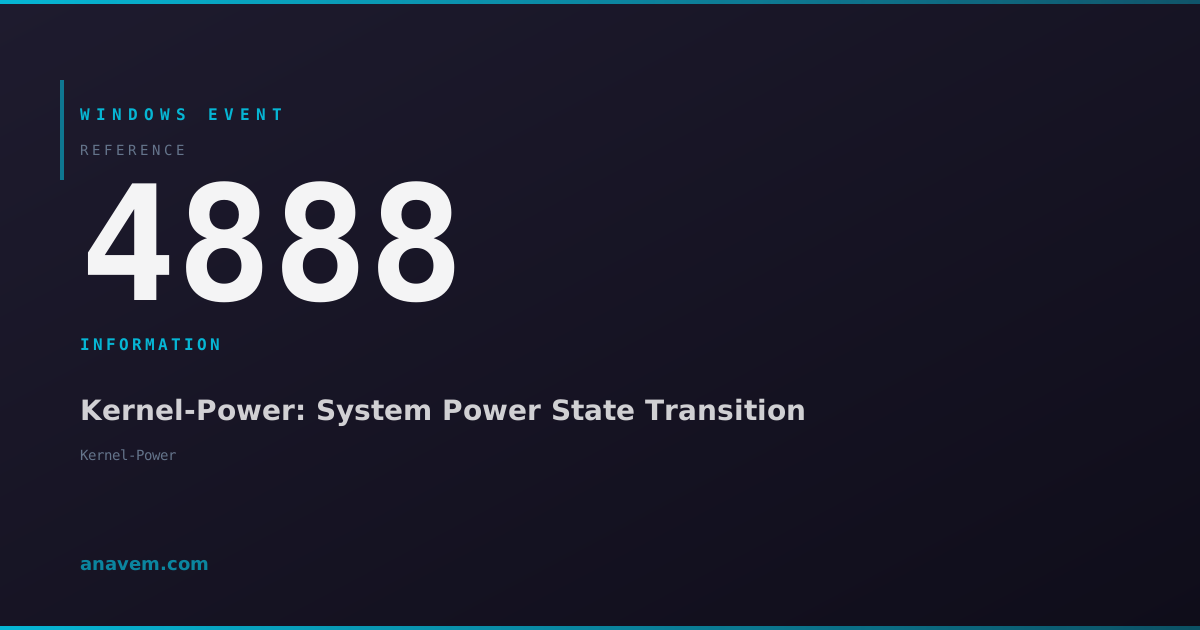
Windows Event ID 4888 – Kernel-Power: System Power State Transition

Event ID 4888 from Kernel-Power indicates a system power state transition, typically logged when Windows enters or exits sleep, hibernate, or shutdown states during power management operations.

Emanuel DE ALMEIDAEmanuel DE ALMEIDA
18 March 202612 min read 0
Event ID 4888Kernel-Power 5 methods 12 min
Event Reference

What This Event Means

Event ID 4888 is generated by the Windows Kernel-Power subsystem whenever the operating system transitions between different power states. This event serves as a breadcrumb trail for system administrators tracking power-related activities and correlating them with other system events or application behaviors.

The event typically contains details about the power state transition type, timestamp information, and sometimes additional context about what triggered the state change. Common scenarios include user-initiated sleep commands, automatic hibernation due to inactivity, scheduled shutdowns, or wake events triggered by network activity or hardware interrupts.

In enterprise environments, this event becomes particularly valuable when managing large server farms or workstation deployments where power management policies need careful monitoring. The event helps distinguish between planned power operations and unexpected system behavior that might indicate hardware failures or software conflicts.

Modern Windows versions in 2026 have enhanced power management capabilities, making Event ID 4888 more granular in its reporting. The event now includes additional metadata about power source changes, battery status transitions, and advanced power feature activations that weren't available in earlier Windows versions.

Applies to

Windows 10Windows 11Windows Server 2019/2022/2025
Analysis

Possible Causes

  • User-initiated sleep or hibernation commands through Start menu or keyboard shortcuts
  • Automatic power state transitions due to configured power plans and timeout settings
  • System wake events triggered by network adapters, USB devices, or scheduled tasks
  • Controlled shutdown sequences initiated by Windows Update, software installations, or administrative commands
  • Power source changes such as switching between AC power and battery on laptops
  • Hardware-triggered power events from ACPI-compliant devices or motherboard power management
  • Group Policy-enforced power management settings in domain environments
  • Third-party power management software interactions with Windows power subsystem
Resolution Methods

Troubleshooting Steps

01

Review Event Details in Event Viewer

Start by examining the specific details of Event ID 4888 to understand the power transition context.

  1. Open Event Viewer by pressing Win + R, typing eventvwr.msc, and pressing Enter
  2. Navigate to Windows LogsSystem
  3. Filter the log by clicking Filter Current Log in the Actions pane
  4. Enter 4888 in the Event IDs field and click OK
  5. Double-click on recent Event ID 4888 entries to view detailed information
  6. Note the timestamp, power state information, and any additional data in the event details

Alternatively, use PowerShell to query these events programmatically:

Get-WinEvent -FilterHashtable @{LogName='System'; Id=4888} -MaxEvents 20 | Format-Table TimeCreated, Id, LevelDisplayName, Message -Wrap
Pro tip: Compare the timestamps of Event ID 4888 with other system events to identify patterns or correlations with application crashes or service interruptions.
02

Analyze Power Management Configuration

Examine your current power management settings to understand why power state transitions are occurring.

  1. Open Control PanelHardware and SoundPower Options
  2. Click Change plan settings for your active power plan
  3. Review sleep and hibernation timeout settings
  4. Click Change advanced power settings to access detailed configuration
  5. Examine settings under Sleep, USB settings, and Power buttons and lid

Use PowerShell to audit current power configuration:

# Get current power scheme
powercfg /getactivescheme

# List all power schemes
powercfg /list

# Export current power settings
powercfg /export "C:\temp\current-power-scheme.pow"

# Check wake timers
powercfg /waketimers

For domain environments, check Group Policy settings:

  1. Run gpedit.msc (Local Group Policy Editor)
  2. Navigate to Computer ConfigurationAdministrative TemplatesSystemPower Management
  3. Review policies for sleep, hibernation, and power button behavior
03

Investigate Wake Sources and Device Activity

Identify what devices or events are triggering power state changes on your system.

  1. Open an elevated Command Prompt or PowerShell session
  2. Run the following commands to analyze wake sources:
# Check what woke the system last
powercfg /lastwake

# List devices that can wake the system
powercfg /devicequery wake_armed

# Generate detailed power report
powercfg /batteryreport /output "C:\temp\battery-report.html"
powercfg /sleepstudy /output "C:\temp\sleep-study.html"

# Check power requests from applications
powercfg /requests
  1. Review the generated reports in your web browser
  2. In Device Manager, check network adapters and USB devices:
  • Right-click devices → PropertiesPower Management tab
  • Note which devices have Allow this device to wake the computer enabled

Use Event Viewer to correlate wake events:

# Find wake events around the same time as Event ID 4888
Get-WinEvent -FilterHashtable @{LogName='System'; Id=1} -MaxEvents 50 | Where-Object {$_.Message -like "*wake*"}
Warning: Disabling wake capabilities on network adapters may prevent Wake-on-LAN functionality and remote management capabilities.
04

Monitor Power Events with Advanced Logging

Enable detailed power management logging to capture more granular information about power state transitions.

  1. Enable additional power management event logging through registry modification:
# Enable verbose power logging (requires restart)
New-ItemProperty -Path "HKLM\SYSTEM\CurrentControlSet\Control\Session Manager\Power" -Name "HiberbootEnabled" -Value 0 -PropertyType DWORD -Force

# Enable power troubleshooter logging
wevtutil sl Microsoft-Windows-Kernel-Power/Thermal-Operational /e:true
wevtutil sl Microsoft-Windows-Power-Troubleshooter/Operational /e:true
  1. Create a custom PowerShell monitoring script:
# PowerShell script to monitor power events
$logName = "System"
$eventIds = @(4888, 4889, 1074, 6005, 6006)

Register-WmiEvent -Query "SELECT * FROM Win32_VolumeChangeEvent WHERE EventType = 2" -Action {
    Write-Host "Power event detected at $(Get-Date)"
    Get-WinEvent -FilterHashtable @{LogName='System'; Id=4888} -MaxEvents 1
}

# Monitor for 1 hour
Start-Sleep -Seconds 3600
Get-EventSubscriber | Unregister-Event
  1. Set up Windows Performance Toolkit (WPT) for advanced analysis:
  • Download and install Windows Performance Toolkit from Windows SDK
  • Use Windows Performance Recorder (WPR) to capture power management traces
  • Analyze traces with Windows Performance Analyzer (WPA) for detailed power state information
05

Correlate with System Performance and Hardware Events

Perform comprehensive analysis by correlating Event ID 4888 with other system events and hardware monitoring data.

  1. Create a comprehensive event correlation query:
# PowerShell script to correlate power events with system issues
$startTime = (Get-Date).AddDays(-7)
$endTime = Get-Date

# Get power events
$powerEvents = Get-WinEvent -FilterHashtable @{
    LogName='System'
    Id=4888
    StartTime=$startTime
    EndTime=$endTime
}

# Get critical system events around the same time
$criticalEvents = Get-WinEvent -FilterHashtable @{
    LogName='System'
    Level=1,2  # Critical and Error levels
    StartTime=$startTime
    EndTime=$endTime
}

# Correlate events within 5-minute windows
foreach ($powerEvent in $powerEvents) {
    $correlatedEvents = $criticalEvents | Where-Object {
        [Math]::Abs(($_.TimeCreated - $powerEvent.TimeCreated).TotalMinutes) -le 5
    }
    
    if ($correlatedEvents) {
        Write-Host "Power event at $($powerEvent.TimeCreated) correlates with:"
        $correlatedEvents | Format-Table TimeCreated, Id, LevelDisplayName, Message
    }
}
  1. Check hardware event logs and system health:
# Check Windows Hardware Error Architecture (WHEA) logs
Get-WinEvent -LogName "Microsoft-Windows-Kernel-WHEA/Operational" -MaxEvents 50

# Check thermal events
Get-WinEvent -LogName "Microsoft-Windows-Kernel-Power/Thermal-Operational" -MaxEvents 20

# System file integrity check
sfc /scannow

# Check disk health
Get-PhysicalDisk | Get-StorageReliabilityCounter
  1. Generate comprehensive system report:
# Create detailed system report
$reportPath = "C:\temp\power-analysis-$(Get-Date -Format 'yyyyMMdd-HHmmss').html"

# Combine multiple data sources
$systemInfo = Get-ComputerInfo
$powerConfig = powercfg /query
$recentPowerEvents = Get-WinEvent -FilterHashtable @{LogName='System'; Id=4888} -MaxEvents 100

# Export to HTML report (custom formatting required)
$htmlReport = @"
Power Management Analysis Report

System Power Analysis - $(Get-Date)

System Information

Computer: $($systemInfo.CsName)

OS Version: $($systemInfo.WindowsVersion)

Recent Power Events

$(($recentPowerEvents | ConvertTo-Html -Fragment)) "@ $htmlReport | Out-File -FilePath $reportPath Write-Host "Report saved to: $reportPath"
Pro tip: Schedule this correlation analysis to run weekly using Task Scheduler to proactively identify patterns in power management behavior.

Overview

Event ID 4888 from the Kernel-Power source fires during system power state transitions in Windows. This informational event captures when your system moves between different power states such as entering sleep mode, waking from hibernation, or during controlled shutdown sequences. The event is part of Windows' power management subsystem and helps administrators track power-related activities across their infrastructure.

You'll typically encounter this event in the System log when investigating power management issues, unexpected shutdowns, or when monitoring server power cycles in enterprise environments. The event provides valuable context about power state changes that can correlate with application crashes, service interruptions, or hardware-related problems.

Unlike critical power events that indicate system failures, Event ID 4888 represents normal power management operations. However, frequent occurrences might indicate underlying hardware issues, driver conflicts, or misconfigured power policies that warrant investigation.

Frequently Asked Questions

What does Event ID 4888 from Kernel-Power actually mean?+
Event ID 4888 indicates a normal power state transition in Windows, such as entering sleep mode, waking from hibernation, or during controlled shutdown sequences. It's an informational event that helps track power management activities and is not indicative of a problem by itself. The event provides valuable context for correlating power-related activities with other system events or application behaviors.
Should I be concerned if I see multiple Event ID 4888 entries in my logs?+
Multiple Event ID 4888 entries are typically normal, especially on laptops or systems with active power management policies. However, if you notice an unusually high frequency of these events, it might indicate issues with power settings, hardware problems, or software conflicts causing unexpected power state changes. Monitor the pattern and correlate with other system events to determine if investigation is needed.
How can I prevent unwanted power state transitions that generate Event ID 4888?+
To control power state transitions, modify your power plan settings through Control Panel > Power Options, disable wake capabilities on specific devices in Device Manager, check for wake timers using 'powercfg /waketimers', and review Group Policy settings in domain environments. You can also use 'powercfg /requests' to identify applications preventing sleep states and 'powercfg /lastwake' to determine what last woke your system.
Can Event ID 4888 help me troubleshoot system performance issues?+
Yes, Event ID 4888 can be valuable for troubleshooting by providing timestamps of power state changes that you can correlate with application crashes, service interruptions, or performance degradation. By analyzing these events alongside other system logs, you can identify patterns where power transitions coincide with system issues, helping pinpoint whether power management is contributing to stability problems.
What's the difference between Event ID 4888 and other Kernel-Power events?+
Event ID 4888 specifically tracks normal power state transitions, while other Kernel-Power events serve different purposes. For example, Event ID 41 indicates unexpected shutdowns or system crashes, Event ID 109 relates to kernel power manager issues, and Event ID 137 involves power source changes. Event ID 4888 is informational and represents planned power operations, unlike critical events that indicate system failures or hardware problems.
Documentation

References (2)

Emanuel DE ALMEIDA
Written by

Emanuel DE ALMEIDA

Senior IT Journalist & Cloud Architect

Microsoft MCSA-certified Cloud Architect | Fortinet-focused. I modernize cloud, hybrid & on-prem infrastructure for reliability, security, performance and cost control - sharing field-tested ops & troubleshooting.

Discussion

Share your thoughts and insights

You must be logged in to comment.

Loading comments...